Hematology labs
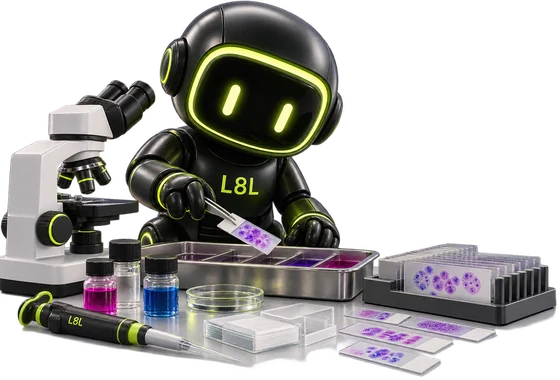
Archived slides with known answers, and questions you can’t ask at scale.
- REPRODUCE
- VALIDATE
Applied AI research
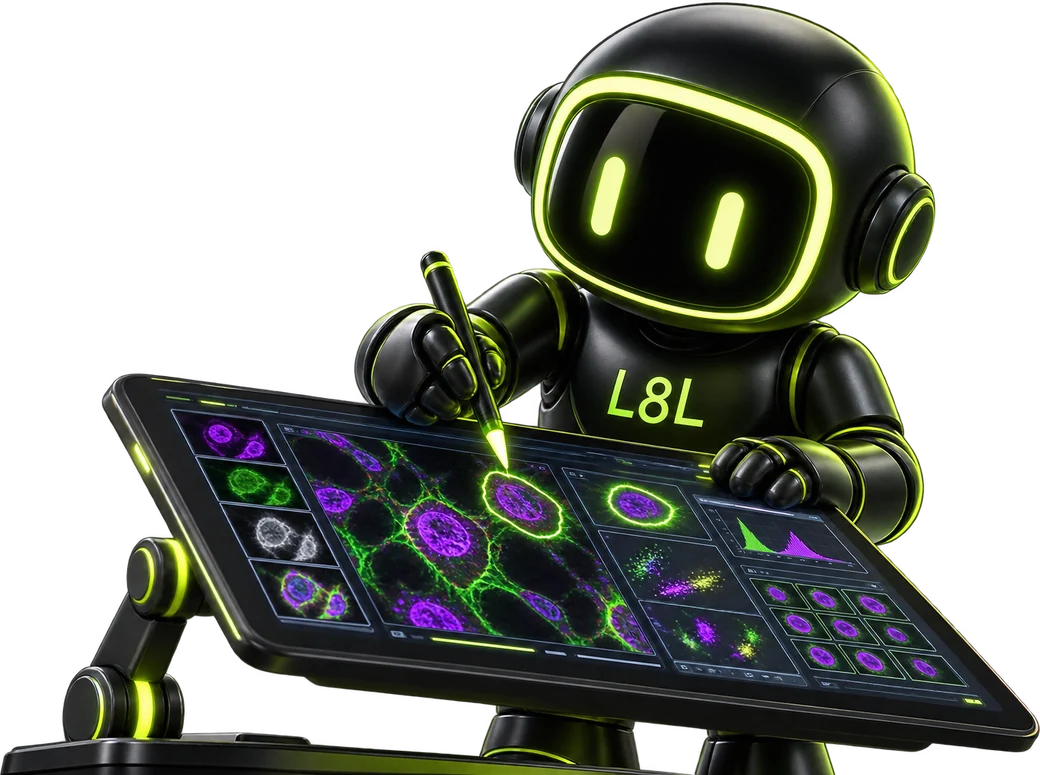
We build AI that reads photographs of ordinary stained blood and marrow cells, and we publish how it measures up against the studies it reproduces.
Research programme · Not a diagnostic device
Serious science.
Small robots.
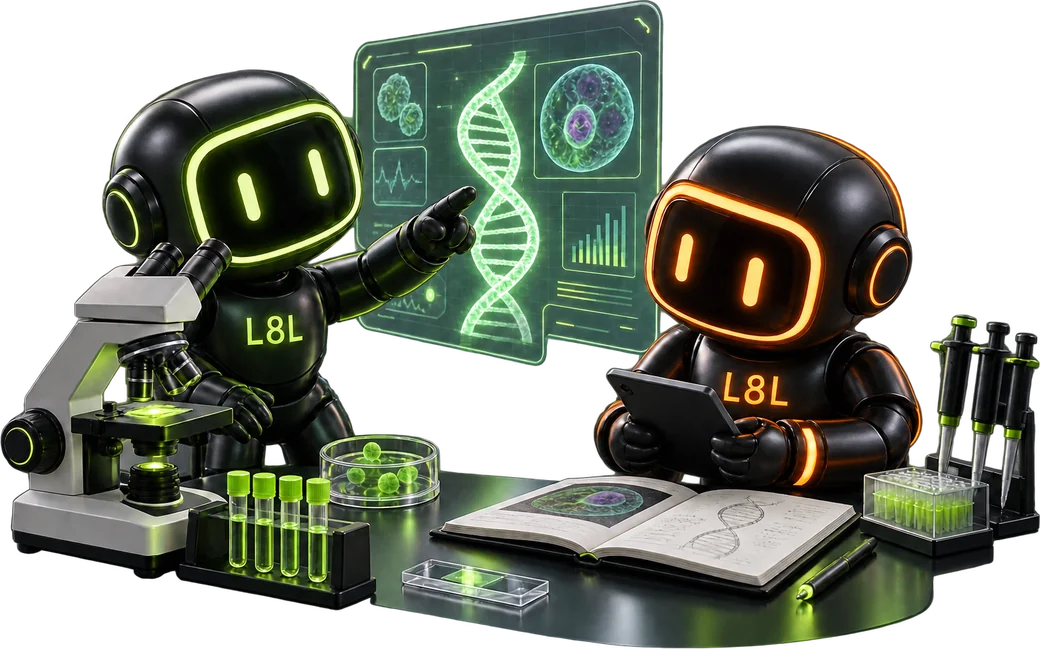
What we do
One flagship programme and four ways to work with us. Every result is measured the way the original study measured it.
Reads ordinary stained-cell photographs to answer questions that usually need slower, costlier tests.
Open CP-HRIC →If we can’t measure it,
we don’t claim it.
Built for research
We work with people who have the slides, the questions, or the methods, and want an honest measurement.
Collaborate with usArchived slides with known answers, and questions you can’t ask at scale.
Co-develop a method and publish it together.
Honest baselines and paper-matched protocols to build on.
What could a slide and a camera tell a lab far from a specialist?
Two models, two robots
CP-HRIC runs two model families side by side, and every experiment scores both.
 CP-HRIC-MILReads all of a patient’s cells at once and points to the ones that drove its answer.
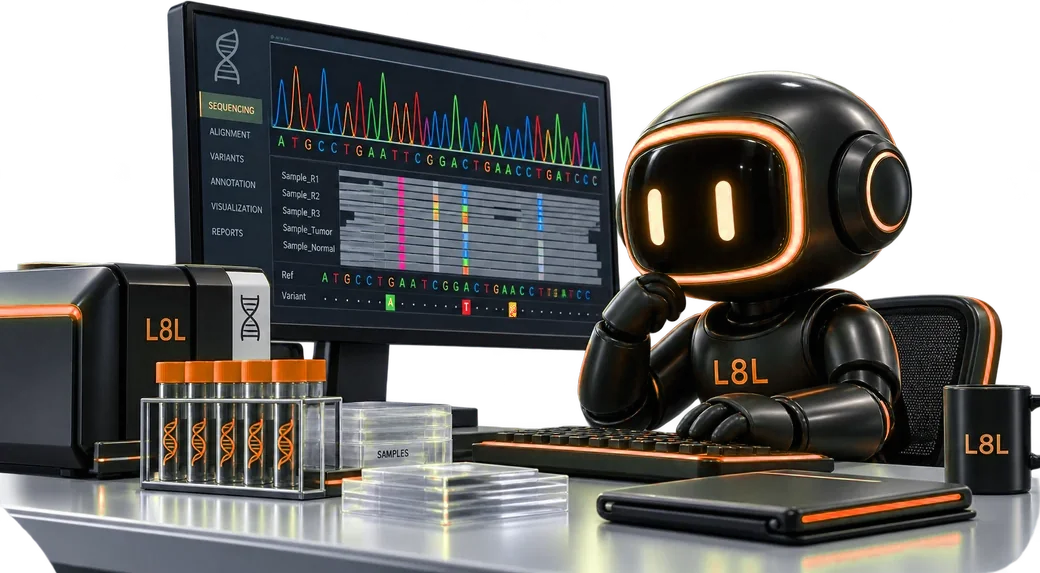 System OneScores every single cell with typed probabilities, then reasons from the cells up.
Collaboration
From a question you’d like answered to a method we build together. You decide.
See how every experiment was run →Your lab
Layer 8 Labs
Your question.
Our pipeline.
Underneath it all
Every CP-HRIC result follows the same reporting standard, whether it flatters us or not.
If we can’t measure it the paper’s way, we don’t claim it.
Collaborate with us
You don’t need a protocol or a data agreement to start. Tell us what you have and what you’d like to know.
Design preview — your selections carry into the contact form, where you can add your details.
Your material
Tell us what you have
REPRODUCE
The paper, its way
VALIDATE
New data · New sites
DEVELOP
Methods · Models
PUBLISH
Measured · Open
Concept illustration · highlighted steps follow your selection
Your project (so far)
Common questions
Here are a few things people often ask. If you don’t see yours, get in touch below.
Real science.
Real answers.
No. CP-HRIC is a research programme. It is not a diagnostic device. Nothing on this site is medical advice or a clinical service.
Published research datasets of stained blood and bone-marrow cell images. The datasets behind each experiment are named on that experiment’s page.
Each experiment reproduces a published study on its own data and measures our models the way that study did. Results are reported as a mean across independently trained runs, with the spread and the paper’s own number beside it.
We’d like to talk about it. Any collaboration starts with what can be shared, under what agreement, and how patient privacy is protected. We never publish patient-identifying data.
Hematology and pathology labs, academic research groups, and imaging-AI researchers. Start with the form below and tell us what you have.
On the CP-HRIC pages: every experiment, every model, and how each was measured. The numbers there are generated from the experiment records, never typed by hand.
Get in touch
Tell us what you’re running, what you’re bringing, or what’s keeping you up at night. Email, call, or send a note through the form.
A real person
reads every one.